Safe steps, what to avoid and how to stop it coming back.
The quick answer: how to remove ice from gutters safely comes down to three things. Clear the downspouts first, pull snow off the lower roof with a roof rake from the ground, and let warm days and calcium chloride do the melting. Do not chip, hammer or pry at the ice, and stay off icy ladders. If the same gutters freeze every winter, the lasting fix is heat, which is what heated gutter guards provide.
Ice and icicles along a frozen gutter
Start with the downspouts
Most frozen gutters start at the bottom. Water runs down the downspout, hits the cold ground and freezes, and the ice works its way up. Once the outlet is plugged, the gutter fills and freezes behind it.
Check the bottom elbow and any extension first. Clear packed snow away from the outlet. If the elbow is frozen, a bucket of warm water poured slowly over the outside of the elbow often frees it. Point the water away from the house, and salt the path if it will refreeze where people walk.
Why gutters freeze in the first place
A gutter freezes when water gets into it faster than it can drain, and the temperature then drops. That happens most on cold nights after a sunny day, when snow melts on the roof in the afternoon and refreezes after dark. It also happens when leaves or a plugged downspout slow the water down.
So the north side of the house, gutters under roof valleys and gutters with long runs to one downspout tend to freeze first. If you know which runs those are on your house, you can check them first after every storm.
Rake the lower roof from the ground
A roof rake with an extension pole lets you pull snow off the bottom three or four feet of roof while standing on the ground. Less snow at the edge means less meltwater feeding the ice. Pull gently and leave a thin layer of snow on the shingles, because scraping down to the surface can damage them.
Do not stand directly under the eave while you pull. Snow and ice can come down in a slab.
Gutter edge clear of ice after a heated gutter guard install
Melt channels with calcium chloride
Calcium chloride ice melt is the safer choice around roofs and gutters. A common trick is to fill a leg of an old pair of tights with it, tie the end, and lay it across the ice so it hangs over the gutter. It melts a channel that lets trapped water drain.
Avoid rock salt, which is sodium chloride. It corrodes aluminum gutters and fasteners and harms the plants below. Keep any ice melt off painted surfaces where you can.
What not to do
Do not chip at ice with a hammer, ice pick or shovel. It tears shingles and dents or splits gutters.
Do not climb a ladder onto an icy roof edge. Ladders slip on frozen ground and ice.
Do not use open flame or a heat gun on the roof or gutters.
Do not pour boiling water on the roof. It refreezes fast and can crack cold materials.
Do not hang off a gutter loaded with ice. It can pull off the fascia.
Freezing rain makes all of this worse, and the National Weather Service points out how much weight even a thin coat of ice adds. If the gutter is sagging under ice, leave it for a professional.
When to call a professional
Call for help if water is coming inside, if gutters are pulling away from the house, or if the ice is above a second-story roof. Ice dam removal services use low-pressure steam, which melts ice without damaging shingles. It costs more than doing it yourself, but it is far cheaper than a fall or a new roof.
We do not do emergency ice removal. We fix the gutter side of the problem so it does not keep happening.
How to stop gutters icing up again
Ice in the gutter is a symptom. The cause is usually heat leaking into the attic, which melts snow higher up, plus a gutter or downspout with nowhere for that water to go. Sealing attic air leaks and adding insulation helps the first part. Our ice dam prevention guide walks through those steps.
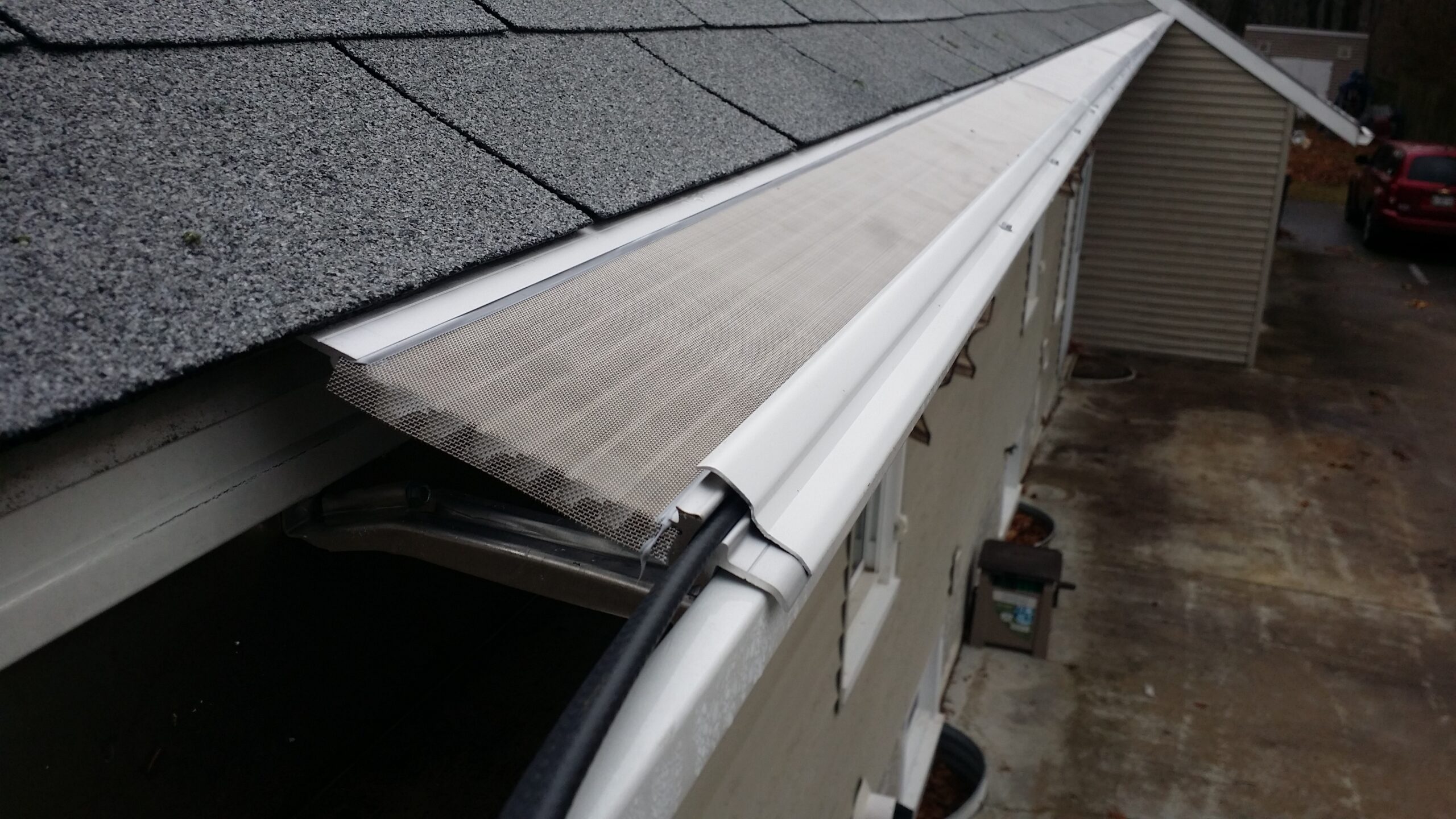
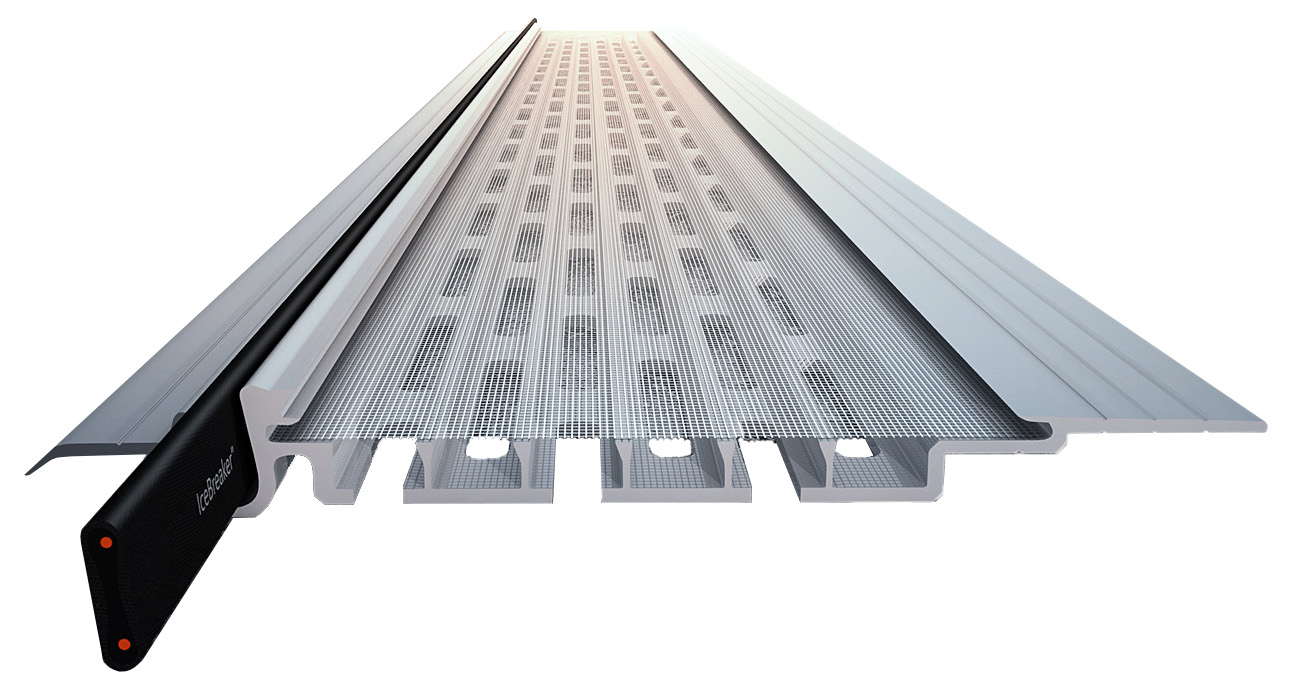
For the second part, heated gutter guards keep the gutter open. A self-regulating cable sits inside the guard and runs down each downspout, so meltwater keeps moving to the ground. Most homes only heat the runs that ice up. Typical prices are in our heated gutter guards cost guide.
Get a second opinion
If the same runs freeze every winter, we will look at the house and tell you whether heat at the gutter makes sense, or whether the attic is the bigger fix. Call the owner, Brad, at 888-662-5644.
Common questions
What melts ice in gutters fast?
Calcium chloride ice melt in a tied stocking laid across the ice melts a drainage channel. Warm water over a frozen downspout elbow also works.
Is it safe to put salt in gutters?
Avoid rock salt. It corrodes aluminum gutters and fasteners and harms plants. Use calcium chloride and keep it off painted surfaces.
Should I knock icicles off my gutters?
Only small ones you can reach safely from the ground, and never by hitting the gutter. Large icicles are heavy and can take the gutter with them.
Will heat tape stop ice in gutters?
It melts a path, but it does not keep the whole gutter open or keep leaves out. Our heat tape comparison explains the difference.
How long does ice in gutters take to melt?
On a sunny day above freezing, light ice often clears by the afternoon. Thick ice in a long cold spell can last for weeks.
Can I use a hair dryer or heat gun on frozen gutters?
No. Running electrical tools on a wet ladder near ice is a shock and fall risk, and the meltwater refreezes. Use calcium chloride and clear the downspouts instead.
Want a real number for your home instead of a national average? We will measure your roof, check your gutters, and quote your gutter guards in writing, at no charge.