How the main heated systems are built, and what that means in a New England winter.
The quick answer: the best heated gutter guards do two jobs at once. They keep leaves and needles out all year, and they keep the gutter and downspouts open in winter. That means a fine mesh filter with the heat source right under it, plus cable down the downspouts. The Gutterglove IceBreaker we install is built that way. Other systems heat the roof edge or add a heater under a hood, which works differently. This guide compares the designs, not the sales pitches. Our heated gutter guards page covers IceBreaker in detail.
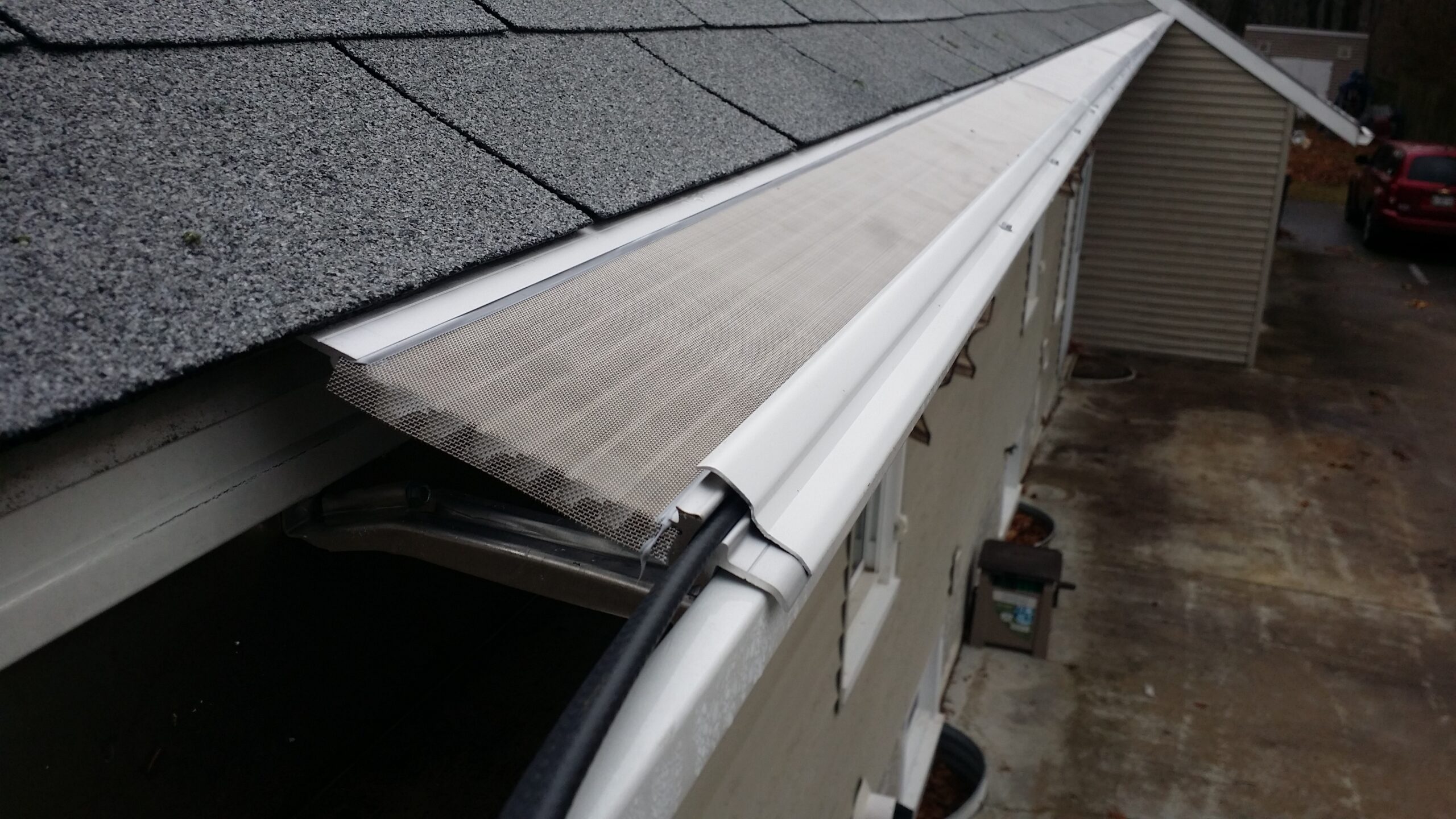
Gutterglove IceBreaker heated gutter guard
What makes a heated gutter guard good
It filters fine debris like pine needles and shingle grit, so the gutter does not fill up
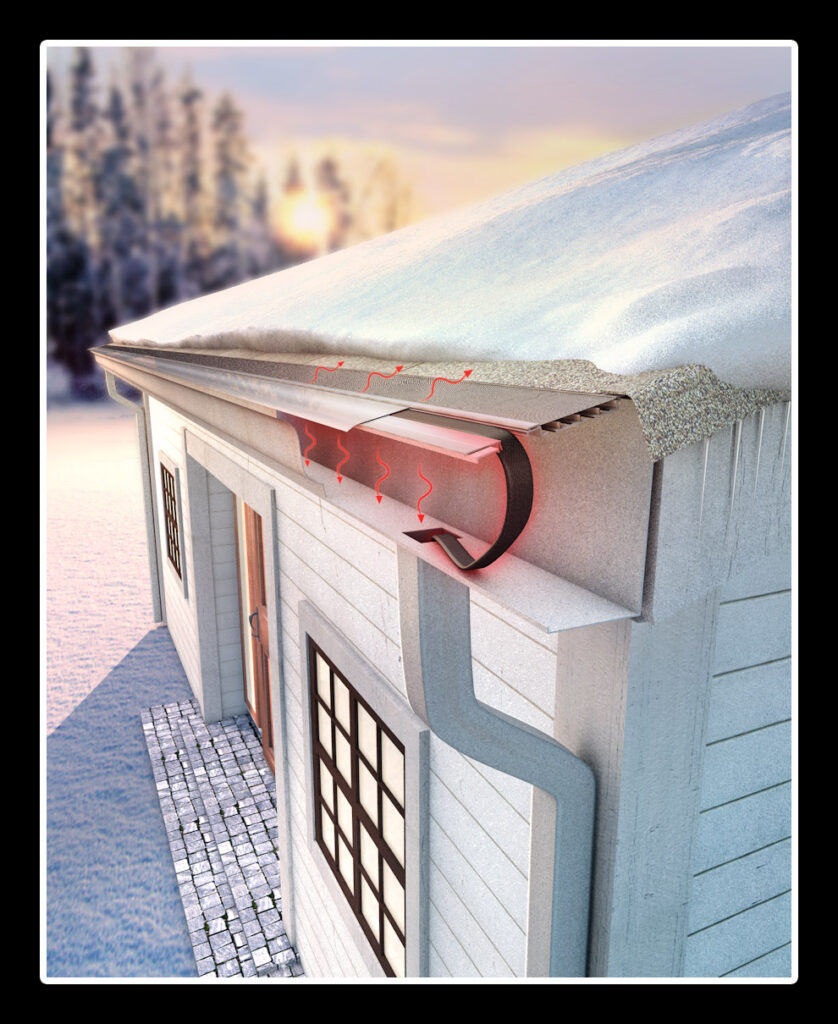
The heat sits close to the filter surface, where ice forms
The cable continues down each downspout
It uses self-regulating cable on a controller, so it is not running all winter
It sits low and in line with the roof, so snow slides past
A system that gets all five right keeps a gutter working in a New England winter. Miss one and you usually find out in January.
Gutterglove IceBreaker
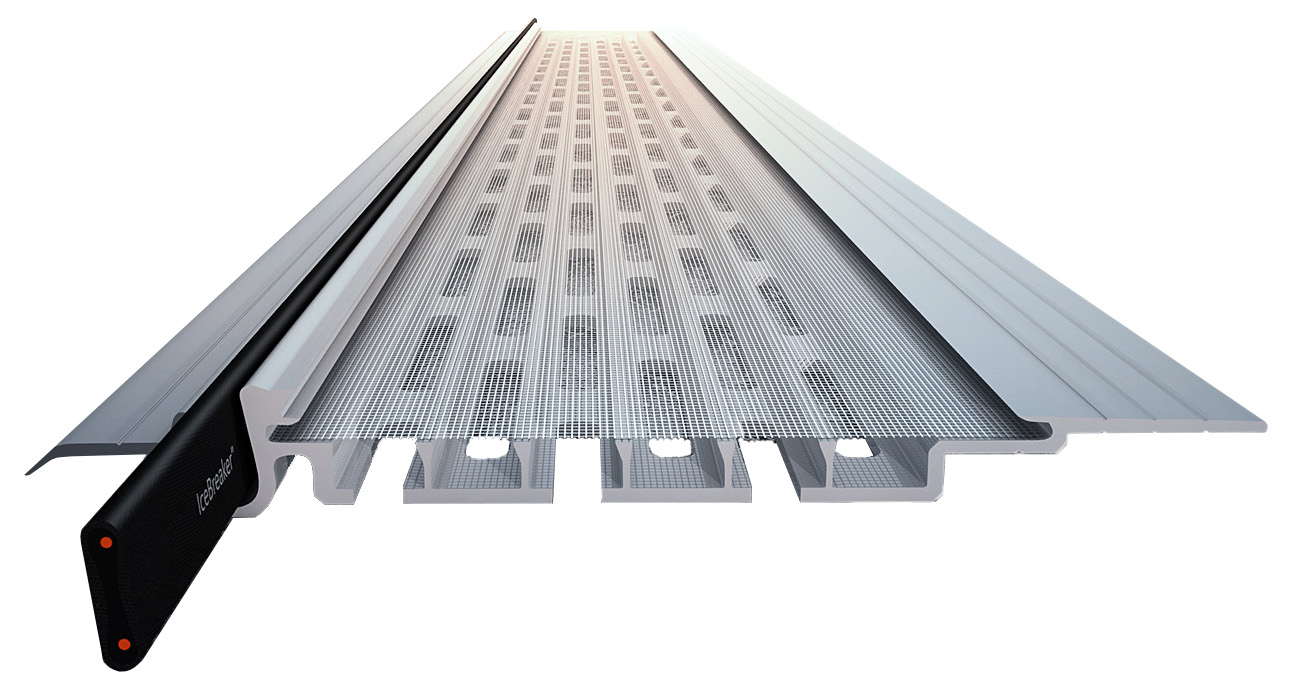
IceBreaker is a stainless micro-mesh guard with a heavy aluminum housing. The housing has a channel under the mesh that holds a self-regulating heat cable, and the housing spreads that heat along the whole guard. The same cable runs down the downspouts.
Because it is a micro-mesh guard first, it keeps out fine debris with the heat off. It sits close to the roof line, so it does not catch sliding snow. This is the system we install across RI, MA and CT, so weigh our view accordingly.
Helmet Heat
Helmet Heat adds a heating element under the Gutter Helmet hood, a reverse-curve guard. Water follows the curve of the hood into the gutter, and the heater sits under that curve to stop ice forming at the lip.
The trade-off is the hood design. Hoods shed big leaves well, but pine needles, seeds and grit can follow water around the lip into the gutter. Heavy rain can also overshoot the curve. If your trees are mostly broadleaf, that matters less.
HotEdge is a roof-edge product. Heated aluminum panels sit along the bottom of the roof, and cable runs through them to keep the edge clear. Some systems add cable in the gutter and downspouts too.
This approach heats the roof edge rather than the gutter itself. It does nothing to keep debris out of the gutter, so most homes still need a separate guard or regular cleaning. It also changes the look of the roof edge, which some owners like and others do not.
Gutter heat panels and add-on kits
There are also heat panels and kits that clip into an existing gutter, along with plain heat tape. They are cheaper and easy to find, and some come with self-regulating cable. But they are an add-on to whatever guard you have, or to an open gutter, rather than a guard built to carry heat.
Channel under the micro-mesh, spread by the housing
Yes
Cable runs down each one
Helmet Heat
Under the hood, at the lip
Partly (hood)
Depends on install
HotEdge
Panels on the roof edge
No
Optional cable
Clip-in kits and heat tape
Wherever the cable lies
No
Only if run separately
Prices vary by installer and house, so we have left them out of the table. Our own typical ranges are in the heated gutter guards cost guide.
What to ask any installer
Is the cable self-regulating or constant-wattage?
Where exactly does the heat sit: under the filter, on the roof or in the trough?
Does the cable run down every downspout?
Who makes the electrical connection, and what controls the system?
How does it handle leaves and pine needles in the fall?
Which parts does the warranty cover, and who backs it?
A good installer answers these without a sales script. Vague answers are a reason to ask to see the product and the cable before you sign.
Which one fits your house
If you have pine trees, a lot of shingle grit or a history of clogged gutters, a micro-mesh heated guard makes the most sense, because it solves debris and ice together. If your problem is mostly icicles on one short run and your gutters stay clean, a smaller heat cable job may be enough.
Either way, start by asking where the ice forms and why. The UMass Building and Construction Technology program traces most ice dams back to attic heat loss, and no gutter product changes that. Our guide to ice dam prevention covers the attic side, which no heated product fixes on its own.
Common questions
What is the best heated gutter guard?
The best designs filter fine debris and put the heat right under the filter, with cable down the downspouts. Gutterglove IceBreaker is built that way, and it is the system we install.
Are heated gutter guards better than heat tape?
They cover the whole gutter opening, keep leaves out and hide the cable. Heat tape costs less but only melts a path and does nothing about debris.
Do heated gutter guards work with any gutters?
They need sound, properly pitched gutters. If the gutters are failing, it makes sense to replace them first.
Can heated gutter guards go on copper gutters?
Some can. The IceBreaker housing is anodized aluminum, which suits copper gutters. Ask about your specific gutters before you buy.
Want a real number for your home instead of a national average? We will measure your roof, check your gutters, and quote your gutter guards in writing, at no charge.