What happens to gutter guards in snow and ice, and what to do about it.
The quick answer: gutter guards in winter can ice over in a cold snap or after freezing rain, but they do not cause ice dams. Ice dams start higher on the roof, when attic heat melts snow that refreezes at the cold edge. A good micro-mesh guard sheds most snow and still drains on mild days. If your roof edge ices up every winter no matter what, the fix is heat, which is what heated gutter guards are for.
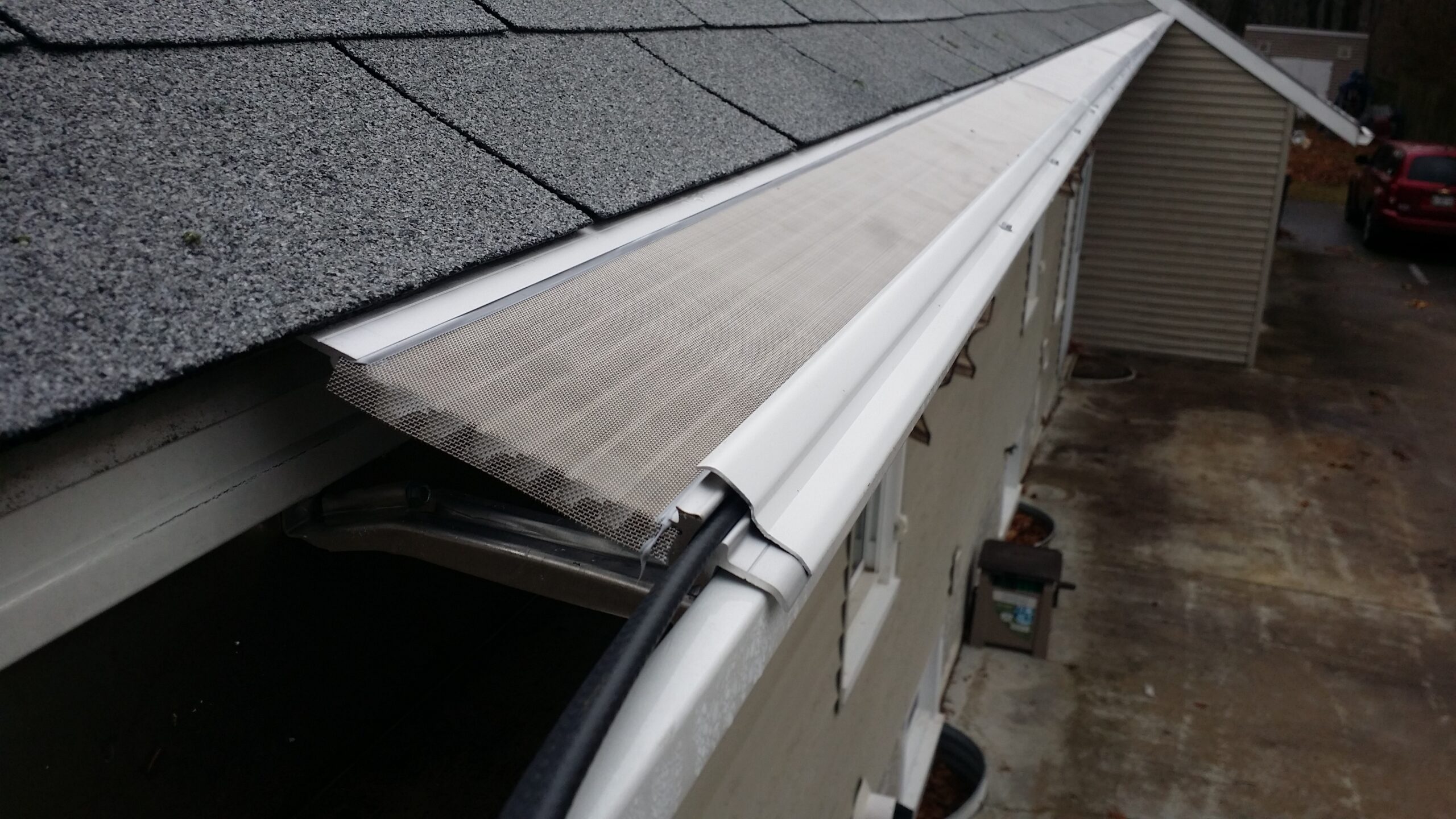
Heated gutter guard keeping a gutter clear of ice in winter
Do gutter guards freeze?
Yes, sometimes, and so does an open gutter. When it rains on a cold roof or snow melts and refreezes overnight, a thin layer of ice can form on top of the guard. Water then runs over it instead of into the gutter. On most days that ice melts off by the afternoon. In a long cold spell it can stay for a week.
How much a guard freezes depends on its design. Fine stainless micro-mesh lets water through quickly and has nothing for ice to hang on. Hoods and reverse-curve guards tend to ice at the lip, where water has to wrap around a curve. Plastic screens and foam inserts hold water and freeze solid.
Do gutter guards cause ice dams?
No. An ice dam forms when warm air leaking from the house heats the roof deck, melts snow above the eave, and that water refreezes where the roof is cold. The ice builds a ridge, and meltwater backs up under the shingles. That happens with or without gutter guards, and it happens on houses with no gutters at all. The UMass Building and Construction Technology program puts the cause where it belongs: heat loss from the attic.
What a gutter does affect is where the water goes after it melts. A gutter packed with frozen leaves backs up faster. A clear gutter, guarded or not, gives meltwater somewhere to drain. Our guide to what an ice dam is walks through the full cycle.
Downspouts freeze first
When a gutter backs up in winter, the downspout is often the real problem. Water runs down the inside, the bottom few feet freeze where they meet cold ground, and the ice works its way up. Once the downspout is plugged, the gutter fills and freezes no matter what kind of guard is on it.
Check the bottom of each downspout after the first hard freeze. A splash block or extension that holds standing water will freeze solid. Heated systems run cable down inside the downspout for this reason, so the whole path to the ground stays open.
If a downspout or gutter is already frozen, our guide on how to remove ice from gutters covers the safe way to clear it.
Icicles hanging from a roof edge in winter
Which gutter guards handle snow and ice best
Guard type
In snow and ice
Stainless micro-mesh (Gutterglove Pro)
Drains fast, sheds snow, can skin over with ice in freezing rain
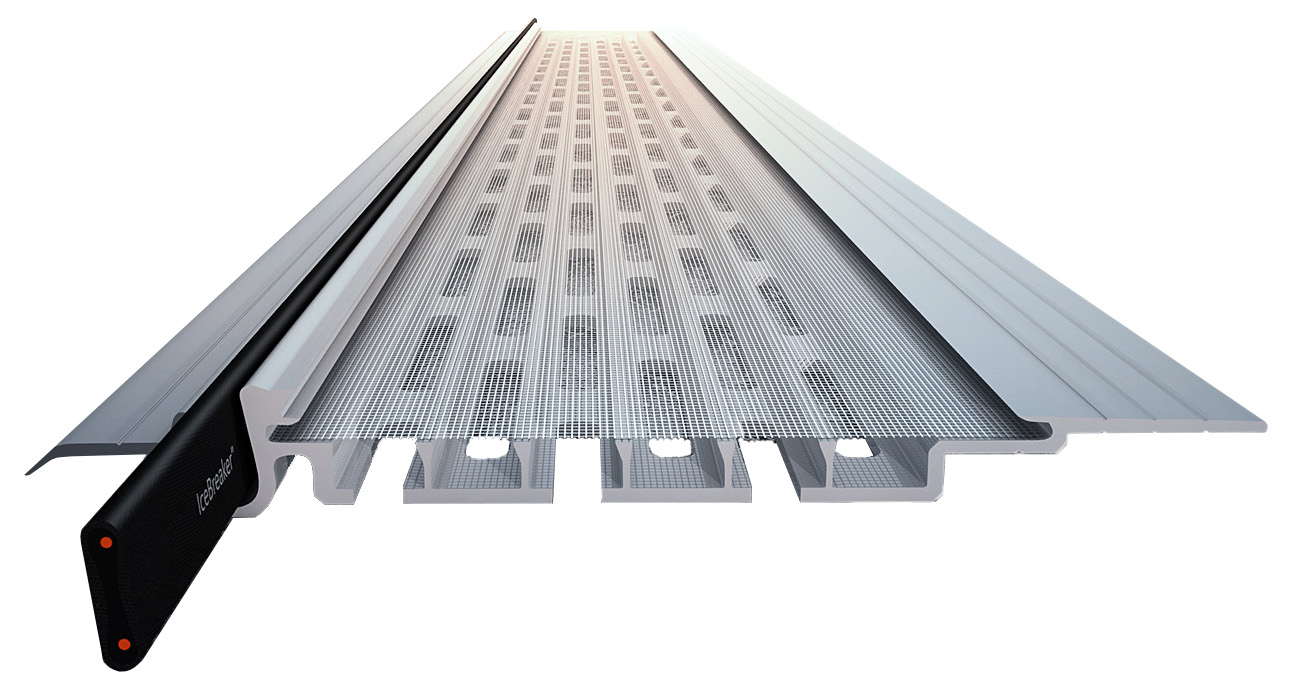
Heated micro-mesh (IceBreaker)
Melts ice on the guard and in the gutter, keeps downspouts open
Hoods and reverse curve
Ice tends to form at the lip, water overshoots
Screens and foam
Hold water and freeze solid
We install Gutterglove Pro and IceBreaker, so weigh our view accordingly. The table sticks to how each design behaves.
Freezing rain is the hard case
Snow is rarely the problem for a good guard. Freezing rain is. Rain that falls on a roof below freezing coats everything in clear ice, including the guard. The National Weather Service notes that even a thin coat of ice adds real weight to branches and power lines. On a gutter, that glaze can seal the mesh for a day or two until temperatures rise. Unheated guards just have to wait it out, while heated guards keep melting through it.
What about snow sliding off the roof?
Heavy snow sliding off a metal roof or a steep pitch can hit the gutter hard. A low-profile guard that sits in line with the roof plane lets most of it slide past. Guards that stick up above the shingle line catch it. If you have a metal roof, snow guards on the roof are worth a look, because they stop the slide before it reaches the gutter.
How to keep gutters working through a New England winter
Get the leaves out in late fall, before the first hard freeze
Make sure downspouts are clear at the bottom, where they often freeze first
Seal and insulate the attic floor so less heat reaches the roof deck
Pull snow off the lower few feet of roof with a roof rake after big storms
Never chip at ice on the gutter or roof, because it damages both
Should you clean gutters before winter?
Yes, and late fall is the time. Leaves that sit in a gutter hold water, and that water freezes into a solid block that no guard or cable can push through quickly. A guard keeps the leaves out in the first place, which is one of the best reasons to have them in New England.
If you already have guards, a quick look in November is still worth it. Check that the downspouts run clear, that no shingle grit has built up in the corners, and that the gutters still have their pitch toward the outlets.
When to go heated
Some runs ice up every year no matter how clean the gutters are: the north side, under valleys, low porch roofs and over doors and walkways. That is where we install heated gutter guards. A self-regulating cable inside the guard and down each downspout keeps the gutter draining all winter. We usually heat only those runs and put unheated Gutterglove Pro on the rest. See the heated gutter guards cost guide for typical prices, or call the owner, Brad, at 888-662-5644.
Common questions
Should I take gutter guards off in winter?
No. Taking them off lets leaves and needles fill the gutter, and a full gutter freezes faster. Keep the guards on and clear the downspouts.
Do gutter guards collapse under snow?
A guard that is screwed to the gutter and set at the right pitch holds up to normal New England snow loads. Snap-in screens and foam can be pushed down or pulled out.
Will ice on my gutter guards damage the gutters?
A thin skin of ice will not. Heavy ice that builds for weeks can pull gutters away from the fascia, which is why problem runs are worth heating.
Do micro-mesh gutter guards freeze?
A thin skin of ice can form on any guard after freezing rain. Fine stainless mesh drains fast and usually clears by the afternoon on mild days.
Can I put salt or ice melt in my gutters?
Avoid rock salt. It corrodes aluminum gutters and fasteners and harms plants below. Clear downspouts and pull snow off the lower roof instead.
Want a real number for your home instead of a national average? We will measure your roof, check your gutters, and quote your gutter guards in writing, at no charge.