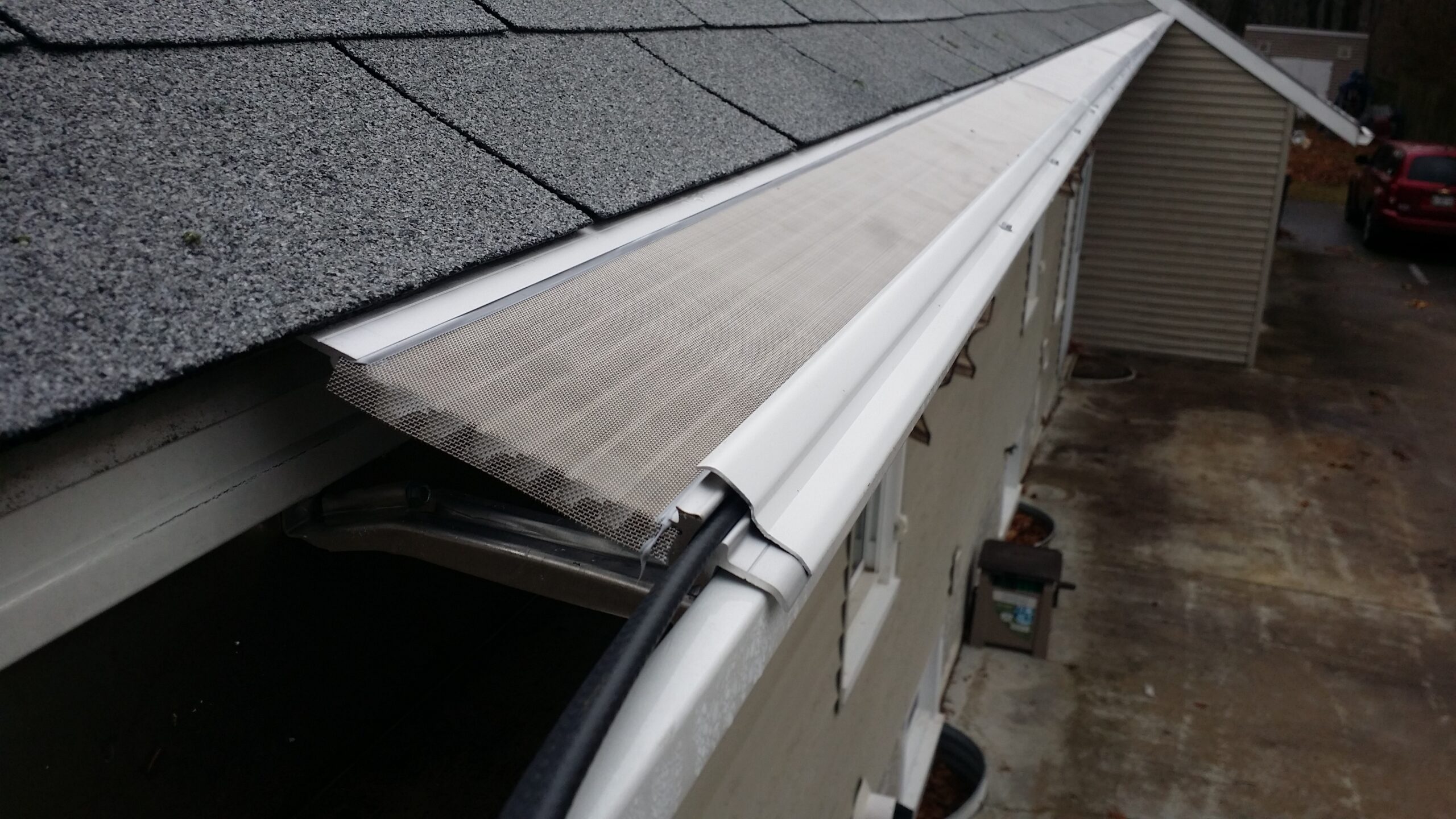
Both melt ice. Only one keeps leaves out and hides the wire.
The quick answer: heat tape for gutters works, and it costs less to install. But it only melts a narrow path, it shows from the street, and it does nothing about leaves. Heated gutter guards put the heat cable inside a micro-mesh guard, so the gutter stays clear of both ice and debris. If ice is your only problem on one short run, tape can be enough. If you fight ice and clogs every year, the heated guard is the better fix.
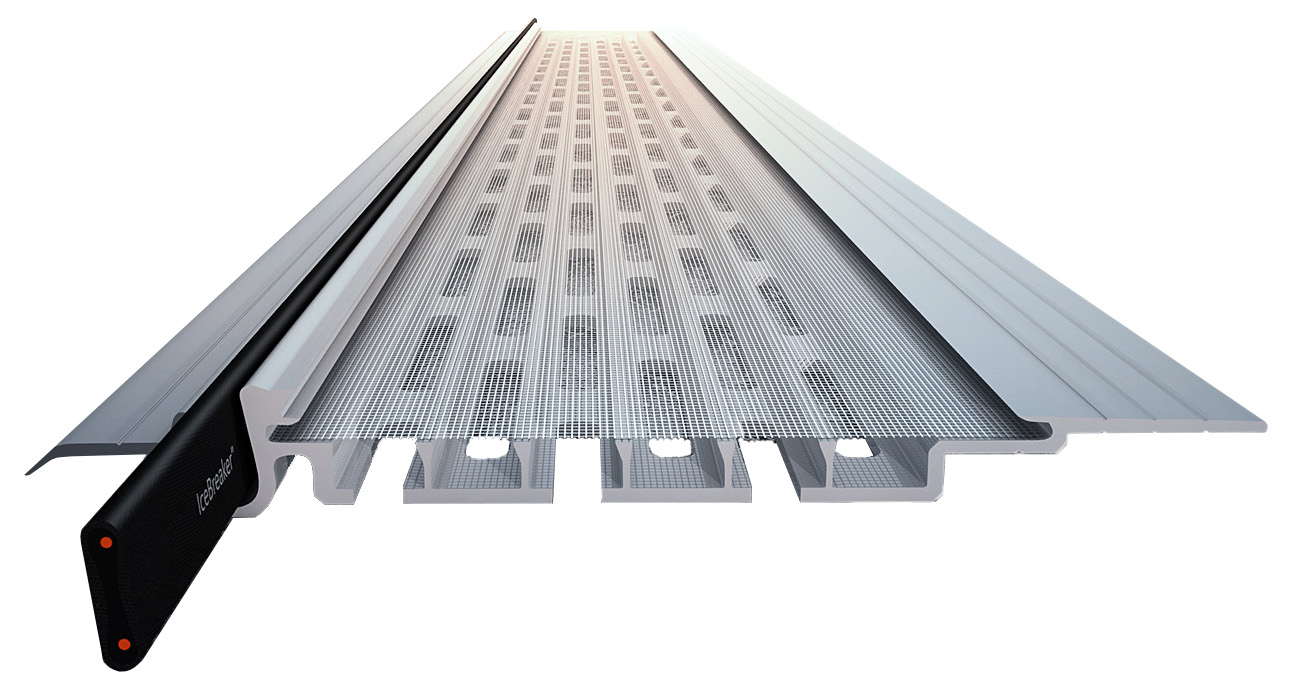
Gutterglove IceBreaker heated gutter guard
What heat tape for gutters actually is
Heat tape is an electric cable you clip to the roof edge in a zigzag. Stores also sell it as roof heat cable or de-icing cable. A straight run usually goes along the bottom of the gutter and down the downspout. When it is on, it melts channels in the snow and ice so water can find its way off the roof.
There are two kinds. Constant-wattage cable puts out the same heat all the time, and it must never cross or touch itself. Self-regulating cable puts out more heat as it gets colder and less as it warms, so it is safer and cheaper to run. Most hardware-store kits are constant-wattage, which is worth checking before you buy.
How heat tape for gutters is installed
A typical install runs the cable up and down the roof edge in triangles, held by clips under the shingle edge. The loops usually reach a little past the warm wall line, so the melted channels start where the ice dam would form. Then a straight run goes along the gutter and down each downspout, so the water has an open path to the ground.
The cable plugs into a GFCI-protected outlet or is wired to a controller. The electrical code requires ground-fault protection for outdoor de-icing cable, which is one reason we use a licensed electrician on every heated job. A plug-in timer is the cheapest control, but it runs the cable on a schedule rather than when there is actually snow or ice.
What heated gutter guards do differently
A heated gutter guard is a gutter guard first. On the Gutterglove IceBreaker we install, a stainless micro-mesh filter keeps out leaves, pine needles and shingle grit all year. Under the mesh, the aluminum housing has a channel that holds a self-regulating heat cable. The housing spreads that heat along the whole guard, and the same cable runs down each downspout.
So instead of a few melted channels, the whole gutter opening stays open. Snow melts into the gutter and drains away instead of freezing at the edge. You can read how the system is built on our heated gutter guards page.
How heated gutter guards keep a roof edge clear of ice
Side by side: heat tape vs heated gutter guards
Heat tape for gutters
Heated gutter guards (IceBreaker)
What it heats
A zigzag path on the roof edge and a line in the gutter
The whole guard and gutter opening
Keeps leaves out
No
Yes, stainless micro-mesh
Looks
Clips and wire visible from the street
Hidden inside the guard
Downspouts
Only if you run cable down them
Cable runs down each one
Upkeep
Clips loosen; cable often needs re-hanging
Set and register once
Typical installed cost
About $10 to $25 per foot
About $30 to $45 per foot
The prices are typical ranges for RI, MA and CT, not quotes. Your roof height, run lengths and distance to power move the number.
Where heat tape falls short
The biggest problem is coverage. Tape melts where the wire is and not much beyond it. On a long eave, ice still builds between the loops, and it can bridge over the melted channels in a cold week. The second problem is leaves. A gutter full of wet leaves freezes into a solid block, and no cable melts that quickly.
Then there is the look. On a colonial with a long front eave, a zigzag of black wire is hard to miss. Clips also work loose over a few winters, especially where snow slides off the roof.
Signs your heat tape is failing
Some loops melt and others stay frozen, which points to a damaged section
The GFCI outlet keeps tripping when the cable is on
The outer jacket is cracked, flattened or chewed
Clips have pulled out and the cable is sagging into the gutter
Ice still builds at the edge even with the cable running
Cracked or crushed cable should be replaced, not taped. If you are replacing it anyway, that is a good time to compare the cost of heated gutter guards on the same runs.
When heat tape is the right call
We are not going to tell you tape never makes sense. It is a fair choice for one short run over a back door or a small porch roof. A rental where looks matter less is another. Tape is also the quickest stopgap if you already have ice building and need water moving this week.
Just remember that tape treats the symptom. Ice dams start when heat from the attic melts snow higher on the roof, as the UMass Building and Construction Technology program explains. Air sealing and insulation fix that cause. Heat at the gutter keeps what melts from refreezing at the edge.
Can you put heat tape in gutters with gutter guards?
Sometimes. You can lay cable in the bottom of the trough under some guards. But most guards were not built to carry heat. The trough stays warm while snow and ice sit on top of the guard. IceBreaker avoids the problem because the channel for the cable is part of the guard.
What it costs to run each one
Running cost depends on the cable, the feet heated and your electric rate. Self-regulating cable draws roughly 5 to 8 watts per foot in freezing weather. For 100 feet running 400 to 800 hours a season, that is about $60 to $190 at around 30 cents per kWh. Constant-wattage tape on a plug-in timer can cost more, because it runs at full power whether it is 10 degrees or 34. Check your own rate on the EIA state electricity profiles. Our running cost guide breaks it down by length.
Our take
If the problem is one short run, tape on a controller is fine. Some homes get icicles along the front, iced gutters on the north side and leaves every fall. Heated gutter guards solve all of that at once, and nothing shows from the street. We are happy to look at the house and tell you which one fits. Call the owner, Brad, at 888-662-5644, or see our heated gutter guards cost guide.
Common questions
Does heat tape for gutters really work?
Yes, if it is installed in the right pattern and on a controller. It melts channels so water can drain, but it does not stop ice forming between the loops or deal with leaves.
Is heat tape a fire risk?
Constant-wattage cable can overheat if it crosses itself or is buried in debris, so follow the installation rules. Self-regulating cable is safer. The electrical code also requires ground-fault protection for outdoor de-icing cable.
Which lasts longer, heat tape or heated gutter guards?
A heated guard is built to stay in place for decades and carries a 40-year manufacturer warranty on the system we install. Clipped heat tape usually needs re-hanging as clips loosen.
Want a real number for your home instead of a national average? We will measure your roof, check your gutters, and quote your gutter guards in writing, at no charge.